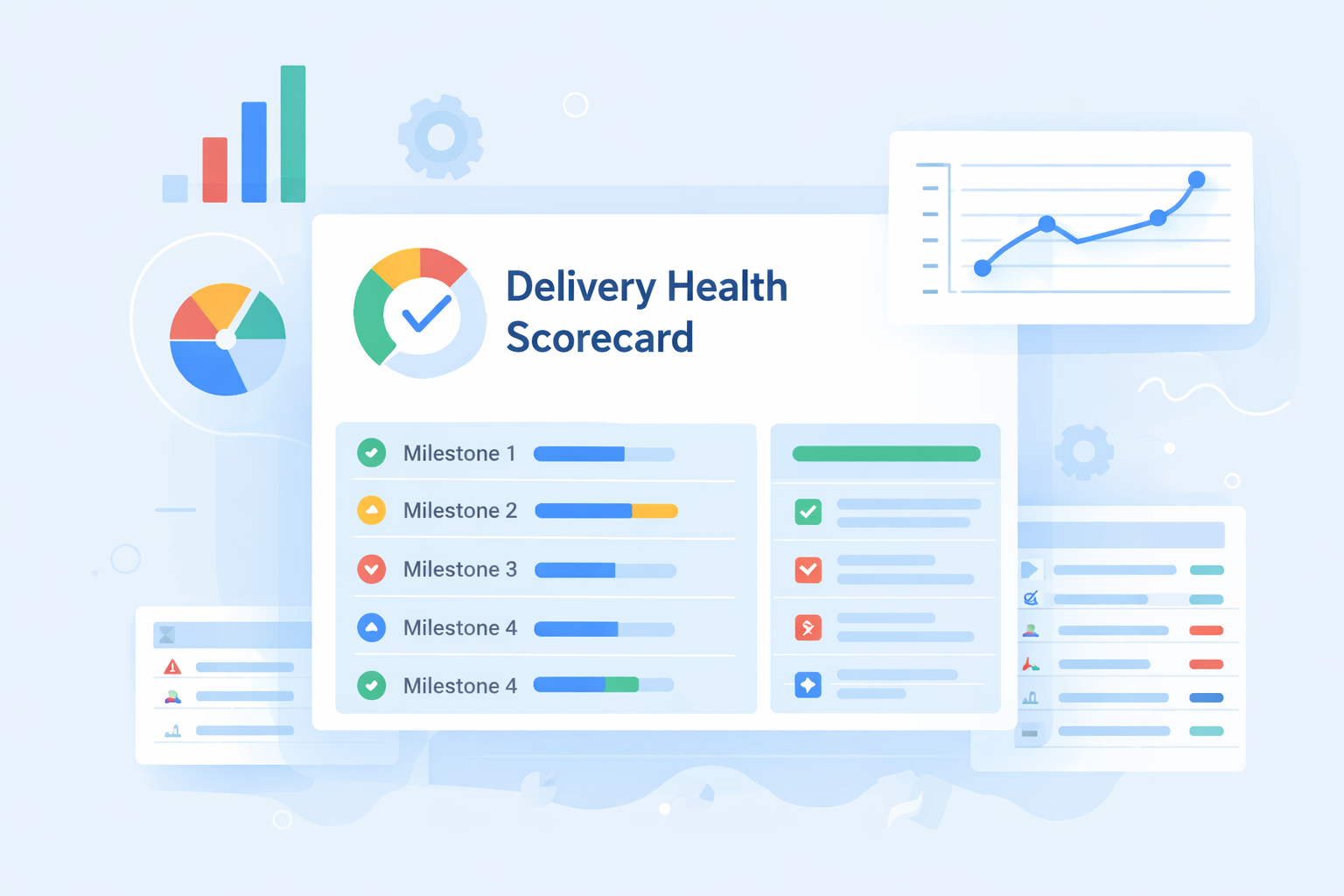
Help leadership distinguish what must truly be protected from what is simply still in motion to avoid churn.
Prevent scarce delivery capacity, funding, and executive attention from being spread across too many simultaneous commitments.
Provide an evidence-based view of where portfolio exposure is concentrated and where leadership intervention will have the greatest protective value.
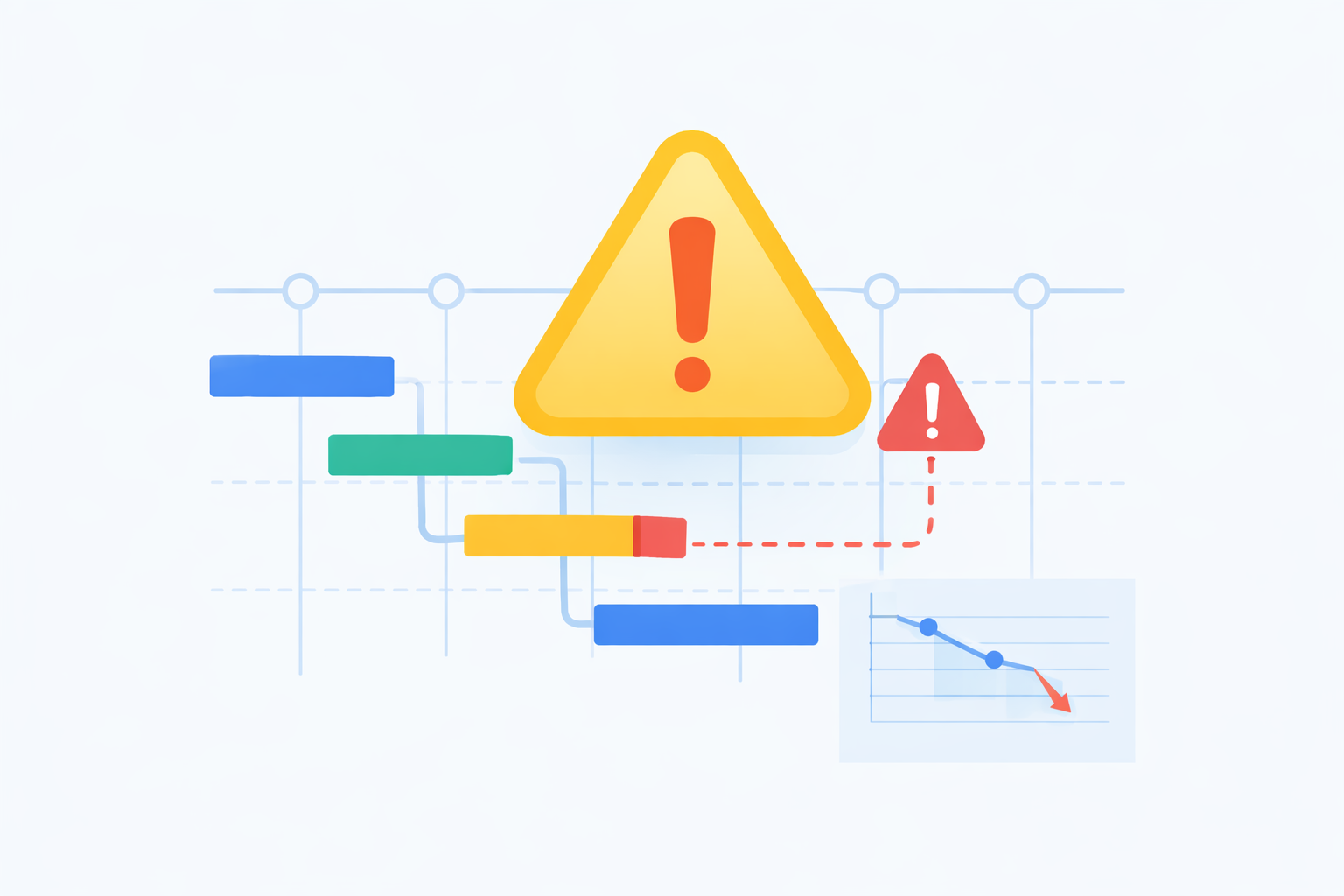
When the delivery narrative and status reports are no longer enough.
Provide a portfolio-level assessment of where delivery risk is truly concentrated, separate from aggregated reporting and local sponsor advocacy.
Help leadership determine what should be protected, slowed, re-sequenced, consolidated, or stopped before overextension hardens into visible failure.
Produce a portfolio risk position that can be explained and defended under executive, sponsor, investment, or board scrutiny.
We determine whether current strategic priorities still reflect real concentration — or whether too much work is being defended as equally important.
We test whether the delivery system has the practical people, specialist capability, and executive bandwidth to sustain the current portfolio safely.
We surface where cross-initiative dependency pressure is increasing fragility beyond what the current portfolio can absorb.
We assess whether the current order, overlap, and concurrency of initiatives remains executable under real operating conditions.
We determine whether leadership could still make and execute difficult prioritisation decisions quickly if value needed to be protected.
Evidence is drawn from artefacts that actually determine whether the portfolio remains strategically controllable, not only those that describe aggregate activity. The core evidence base typically includes:
| Document Type | Description & Evidence Provided |
|---|---|
| Portfolio roadmaps and strategic priority views | Current portfolio plans, strategic commitments, and prioritisation assumptions showing how leadership expects value to be protected. |
| Capacity and resource allocation signals | Evidence of how critical teams, specialist roles, enabling functions, and leadership bandwidth are being distributed across the portfolio. |
| Dependency maps and interlock paths | Cross-initiative dependencies, sequencing constraints, shared delivery windows, and structural interlocks that influence portfolio-level fragility. |
| Escalation patterns and competing urgency signals | Portfolio, PMO, sponsor, and executive signals showing where multiple initiatives are simultaneously demanding intervention or protection. |
| Governance and prioritisation materials | Steering, portfolio, investment, and executive materials that show how strategic choices are currently being framed and defended. |
| Collision and contention indicators | Evidence of where multiple initiatives are competing for the same people, sequencing path, dependency window, or operational constraint. |
| Intervention and re-sequencing history | Past decisions to slow, defer, accelerate, consolidate, or protect work — and whether those choices materially improved portfolio control. |
| Delivery Health and Risk Assessments | Existing project or program health checks, risk logs, and assurance reviews that provide insight into current delivery stability. |
| Portfolio Value and Outcome Tracking | Measures of realised vs. forecast value to show whether delivery effort is still aligning with declared strategic outcomes. |
| Document Type | Description & Evidence Provided |
|---|---|
| Recovery plans, revised baselines, and re-sequencing paths | Detailed plans showing how the initiative expects to regain control, including changes to scope, milestones, and funding. |
| RAID logs and unresolved issue patterns | Recent logs showing whether critical delivery blockers are being resolved, recycled, or carried forward as exceptions. |
| Action and escalation trails | Evidence of how recovery concerns are raised, owned, and acted on across delivery and governance layers. |
| Governance packs and steering materials | Recent cycles of steering committee, PMO, and executive packs showing how recovery is governed and reported. |
| Milestone movement and critical path tracking | Visual evidence of shifts in key dates, checkpoints, and critical path events across reporting cycles. |
| Reporting deltas and narrative shifts | Differences between successive reports that indicate where the delivery narrative may be diverging from the true condition. |
| Work-in-progress and delivery flow signals | Evidence showing whether recovery effort is producing material movement or simply high-velocity visible activity. |
| Dependency chains and interface stability | Internal, vendor, or regulatory dependencies that are currently shaping or preventing the recovery path. |
| Commercial and commitment records | Contractual constraints, partner behaviors, and delivery commitments that influence the realistically recoverable path. |
A clear portfolio-level view of whether the current investment pattern is Stable, Fragile, or Carrying Concentrated Exposure.
A focused assessment of where strategic concentration is holding, where it is weakening, and where shared delivery constraints, dependency interlock, and capacity overload are increasing portfolio fragility.
A prioritised set of actions required to restore strategic concentration, identify which initiatives should be protected first, reduce avoidable overextension, and re-establish a safer basis for portfolio control.
When too many major initiatives are active at once and leadership needs an independent view of what the organisation can still realistically sustain.
When the portfolio is carrying visible strain, but the true concentration of risk and strategic priority is still unclear.
When portfolio reporting exists, but does not provide enough confidence for difficult prioritisation and sequencing decisions.
When multiple initiatives are escalating simultaneously and leadership needs clarity on where intervention should happen first.
When the organisation requires a defensible basis to continue, slow, rebalance, or protect major technology investments.